Showing posts with label Elon Musk. Show all posts

Thursday, February 6, 2020

USA Today Validates Our Prediction about Space & Space Junk

Back on January 15, we published our "Additional Set of Predictions for 2020: A Baker's Dozen of Tech Trends," in which we said: 

"There will be a lot of media space allocated to covering outer space...Meanwhile we also expect coverage about political and legal issues of space as well as articles about things that just a few years ago would have flown under the radar (we've really been trying not to make space puns) such as the growing awareness that too many satellites are causing a traffic jam in space. This space jam began to get recognition as a potential problem in space in 2019 but we think it will get more recognition in 2020. The risk of collisions among satellites is a problem."

On Jan. 28, USA Today wrote: "Heads up: Two satellites might collide in space 559 miles above Pittsburgh."
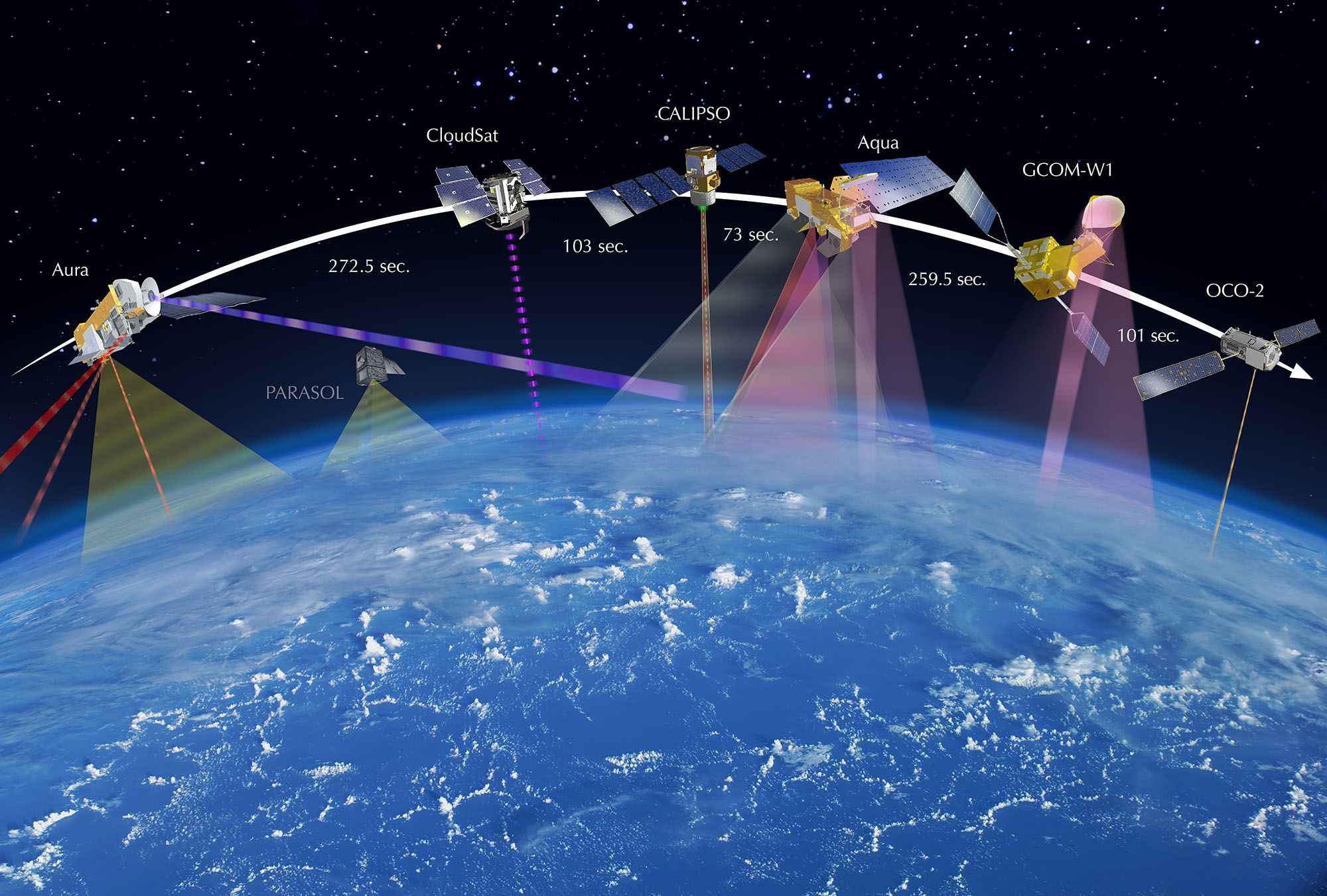
By NASA JPL - http://oco.jpl.nasa.gov/galleries/galleryspacecraft/, Public Domain, https://commons.wikimedia.org/w/index.php?curid=33645603

Update: Since we first published this blog, The Atlantic published an article, "The Night Sky Will Never Be the Same: Elon Musk’s plan for worldwide internet has sent bright artificial, lights streaking through the dark" that also validates our prediction. The Atlantic looks at Starlink, described as "a floating scaffold" that Musk "hopes will someday provide high-speed internet to every part of the world." The problem: 
"These satellites have turned out to be far more reflective than anyone, even SpaceX engineers, expected. Before Starlink, there were about 200 objects in orbit around Earth that could be seen with the unaided eye. In less than a year, SpaceX has added another 240. 'These are brighter than probably 99 percent of existing objects in Earth orbit right now,' says Pat Seitzer, a professor emeritus at the University of Michigan who studies orbital debris."
You might say, so big deal about this prediction? What can we do about this problem. We think it's interesting for several reasons:
  1. This was a topic that was mostly ignored a few years ago. In Feb. 1, 2017, Popular Science published an article about space junk, "If Earth's orbit is so crowded, why don't we see space junk in photos of the Earth?" The article acknowledge a problem with space junk but not the aspect of collisions, and that was just three years ago.
  2. There seems to be more interest in space (and not because of the U.S. Space Force). Awareness of space junk is probably a good thing. What we really need is a solution. There could be a business in decluttering old, useless satellites still in orbit.
  3. From a media perspective, one article may reinforce another reporter filing another story. This is how media bandwagons start, and it may encourage governments and businesses to find a way to remove space junk.

Tuesday, April 3, 2018

Practical Jokes on April Fools Have Impractical Results: 5 Tips on When Not to Use Humor to Humanize Your Brand

We're not big fans of April Fools jokes. Especially now when credibility and corporate culture are currently battle ground issues for news, media and marketing.

We get that April Fools pranks can be seen as a way to humanize a person or company not otherwise associated with a sense of humor. But that can be a strong reason not to engage in a prank.

Three years ago, we wrote a blog about an April Fools prank on Good Morning America that we thought undermined the credibility of ABC News and of George Stephanopoulos

This year's candidate for worst practical joke: Elon Musk. 


This was followed by two other related tweets.

None of them funny given last week's news about a significant recall of 123,000 Model S cars that generated headlines like:

The recall is necessary to fix a power steering bolt, which seems like a fairly important issue to address. And also follows, as the Wall St. Journal noted, "as the electric-vehicle maker grapples with the aftermath of a fatal car crash." The Journal also pointed out that Tesla has about $10 billion in debt.

So the question we'd ask is, "Is this the right time for a CEO of a publicly held company to post a fake Tweet that Tesla is filing for bankruptcy protection?
Our answer is pretty simple: No. This is not a good time. Even, or perhaps, especially, on April Fools -- if only because it sends a message that the bad news doesn't matter.

There is never a good time, really, for a CEO to post as a joke that the company is declaring bankruptcy, followed by a photo of that CEO allegedly drunk.

The result: a 5 percent drop of its share price on Monday, the first day of trading since the faux-bankruptcy Tweets (one of which mentioned a last-ditch Easter egg sale to bring in cash to stave of bankruptcy). Worse, it continues a streak from Sept. 2017 that has seen Tesla lose 36 percent of its share price.

The lessons here include:
  1. Respect your corporate brand.
  2. Humor can humanize a brand but make sure it's the right kind of humor.
  3. It may be a good idea to humanize your brand but make sure the humor works with your brand and your corporate culture.
  4. Don't joke around when you've had bad news because that makes it seem like you're not taking the bad news seriously.
  5. If you've had to issue a substantial recall and $10 billion in debt, don't joke about bankruptcy -- especially if you're the CEO of a publicly held company.
We assume Tesla's PR had nothing to do with the Tweet prank prior to Musk publishing it. But they have a lot to clean up now. That's an unforced error the company didn't need.