Showing posts with label validations. Show all posts

Tuesday, March 31, 2020

New York Times & Wall St. Journal Validate Predictions about Facial Recognition, Robots, Retailapacolpyse and More

Some trends move more quickly than others.

We predicted that privacy would be a big issue this year — this, after years when people said Millennials aren’t concerned about privacy. We’re seeing a lot of articles that raise concerns about privacy. We also said that facial recognition would get a lot of attention this year.

The New York Times recently wrote “Facial Recognition Moves Into a New Front: Schools,” noting that, “A district in New York has adopted the technology in the name of safety. Opponents cite privacy and bias concerns.”

Part of the reason for putting facial recognition in schools is a topic we didn’t identify: the need to improve safety to prevent mass shootings in places that didn’t have or need much security before, including schools, churches and temples. (We do expect to see a lot more coverage about protecting these kinds of locations this year, as these organizations, often nonprofits or otherwise under financed, have to figure out a way to protect the people who visit those locations without keeping away people who need their services.) 

In addition to reporting on facial recognition, the Times also wrote about robots, which we said, “Robots won’t take over in 2020 but will be more commonplace. ” The Times recently published an article, “The Robots Are Coming. Prepare for Trouble,” noting that “Artificial intelligence won’t eliminate every retail job, an economist says, but the future could be grim unless we start planning now.” First, it says that “robots are coming,” not that they are fully here yet, which aligns with our prediction. 

The article also looks at AI and how it’s used in retail — which correlates with another of our predictions! The article notes that the impact of robots and AI in retail has led to more than 6,000 store closings in 2018. Interestingly, the growth of e-commerce is strong, growing at nearly doubled but over the past five years, it went from 6% to 11%.
 (You’d think from all the claims of Amazonification or the coming of the Retailapacalypse, that the percentage of e-commerce as a share of the overall retail market would be substantially higher.) Just wait, we guess.

But the article also mentions how AI is being used to “figure out what customers want and to get it to them quickly,” which is another point we made. 

Meanwhile, more bad news the retail sector. Bloomingdale’s is shutting down its fur boutiques — but that seems like being the victim of fashion trends. But Macy’s is shutting down 125 stores over the next three years and approximately 2000 corporate jobs. The impact is that Macy’s has “served as a backbone for America’s shopping malls.”


This is our final validation for this blog: we had said that food delivery apps are going to face challenges this year, due to completion from other apps and from restaurateurs realizing that they’re not making enough money, maybe even losing money, and that this is not sustainable. Here’s the latest on this from the Journal: “Grubhub Spends to Draw In More Diners: Tight competition is pushing food-delivery rivals to experiment, adapt to industry in flux.” The costs for consumers will have to increase in order to make it sustainable for apps DoorDash, GrubHubs, Uber Eats, and Postmates as well as for the restaurants themselves.

Grubhub said it will sacrifice profits to compete — the challenge is how long they can operate before generating a profit. With an expected $100 million in profits for this fiscal year, we guess they have some runway to reach sustainability. 


We're living in an interesting time: there is a trend for people to spend more time cooking for themselves, with organic ingredients, even with food selection and recipes delivered to your door for you to cook at home. At the same time, we're seeing a strong appetite (pun intended) for food delivery services for people who don't want to prep, cook and clean. We guess that means you can have it your way. 


Which is our way of saying: consumers will have more choices for how to approach meals, and they seem willing to pay a premium for convenience. How much of a premium has yet to be answered.

Thursday, February 6, 2020

USA Today Validates Our Prediction about Space & Space Junk

Back on January 15, we published our "Additional Set of Predictions for 2020: A Baker's Dozen of Tech Trends," in which we said: 

"There will be a lot of media space allocated to covering outer space...Meanwhile we also expect coverage about political and legal issues of space as well as articles about things that just a few years ago would have flown under the radar (we've really been trying not to make space puns) such as the growing awareness that too many satellites are causing a traffic jam in space. This space jam began to get recognition as a potential problem in space in 2019 but we think it will get more recognition in 2020. The risk of collisions among satellites is a problem."

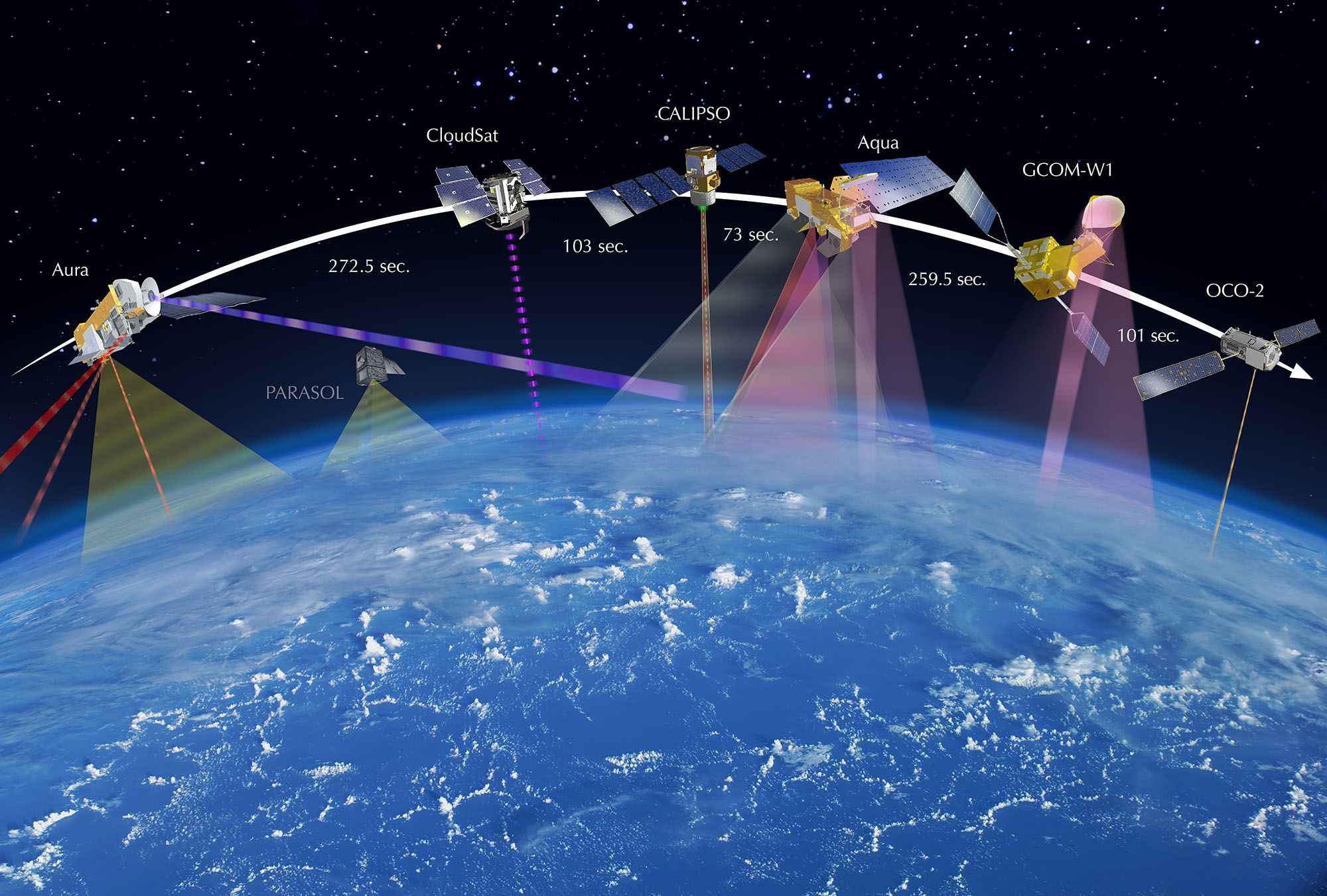
On Jan. 28, USA Today wrote: "Heads up: Two satellites might collide in space 559 miles above Pittsburgh."

By NASA JPL - http://oco.jpl.nasa.gov/galleries/galleryspacecraft/, Public Domain, https://commons.wikimedia.org/w/index.php?curid=33645603

Update: Since we first published this blog, The Atlantic published an article, "The Night Sky Will Never Be the Same: Elon Musk’s plan for worldwide internet has sent bright artificial, lights streaking through the dark" that also validates our prediction. The Atlantic looks at Starlink, described as "a floating scaffold" that Musk "hopes will someday provide high-speed internet to every part of the world." The problem: 
"These satellites have turned out to be far more reflective than anyone, even SpaceX engineers, expected. Before Starlink, there were about 200 objects in orbit around Earth that could be seen with the unaided eye. In less than a year, SpaceX has added another 240. 'These are brighter than probably 99 percent of existing objects in Earth orbit right now,' says Pat Seitzer, a professor emeritus at the University of Michigan who studies orbital debris."
You might say, so big deal about this prediction? What can we do about this problem. We think it's interesting for several reasons:
  1. This was a topic that was mostly ignored a few years ago. In Feb. 1, 2017, Popular Science published an article about space junk, "If Earth's orbit is so crowded, why don't we see space junk in photos of the Earth?" The article acknowledge a problem with space junk but not the aspect of collisions, and that was just three years ago.
  2. There seems to be more interest in space (and not because of the U.S. Space Force). Awareness of space junk is probably a good thing. What we really need is a solution. There could be a business in decluttering old, useless satellites still in orbit.
  3. From a media perspective, one article may reinforce another reporter filing another story. This is how media bandwagons start, and it may encourage governments and businesses to find a way to remove space junk.

Tuesday, February 4, 2020

WSJ Validates Our Trends on Privacy and Robots & Offers Some We DIdn't Consider

We wrote and published our 2020 trends before seeing this article "Robots, Mood Enhancers & Scooters: 10 Top Consumer Trends for 2020" appeared in the Wall St. Journal.
So we're pleased that the Journal picked two of the same trends: privacy concerns and more robots. Our initial set of trends, which included privacy, was published Jan. 8, while our additional set of trends, which included robotics, appeared Jan. 15, the same morning that the Journal article appeared.
The Journal's set of trends included some we didn't consider, including
  • Homebodies: During economic, political and personal uncertainties, people often retreat to their homes, the Journal notes, which will likely fuel growth of internet shopping, home fitness, and food delivery services.
  • Instant Gratification: We didn't frame a prediction about staying home but we took a look at convenience, mentioning those three growth areas. The Journal agreed, and went a bit further: "Shorter attention spans means that people expect information to be as accessible as possible in the quickest possible time frame." We think this absolutely correct.
  • Inclusivity: According to the Journal, "more products and services are highlighting 'inclusivity for all,' including people with physical and mental disabilities. In our set of predictions, we mentioned voice control will be built into more devices, without drawing the connection to inclusivity. We liked this, and are sorry we missed that point.
Check out the other trends the Journal identified in the article.

Monday, January 8, 2018

NY Times' Farhad Manjoo Validates Several of Our Predictions

We're big fans of New York Times' tech columnist Farhad Manjoo. So we're thrilled to see his latest column, "Expect 2018 to Be More Sane? Sorry, It’s Not Going to Happen" (print headline: "In 2018, Expect Chaos To Be the New Normal") because his predictions are in line with ones we made Dec. 14, 2017.

For example, in his Jan. 4th column, Manjoo said, "You're fooling yourself if you think 2018 is going to be any different, sanity- or anxiety-wise, from the roller coaster of the year just concluded." We agree -- especially the part about anxiety-wise because in we said, "People will be more anxious and angry" in 2018. 

Going further, we said:
The ‘60s may have been the Age of Aquarius but this decade seems to be the Age of Anxiety and Anger. One cause: screen addiction. Constantly clicking our smartphones for the latest news – and it seems that there’s continually breaking news – may help us feel we’re on top of the situation but it leaves most of us feeling more empty, worried and angry than before – despite political preferences. We anticipate more coverage on stress, anxiety, mental health and ways to de-stress, which includes taking a break from your device – aka a technology cleanse or digital detox – which is healthy and a good idea but may seem impossible to do.
How does Manjoo describe things?
Chaos is the new normal; the apprehension you feel every time you get a notification on your phone -- the fear that you don't know what fresh horror it could bring -- isn't an overreaction but an adaptation. Thanks to phones and Facebook, anything really could happen tomorrow.
We really like that -- as a phrase, not the reality of it: Chaos is the new normal. And "the fear you don't know what fresh horror it could bring" -- very compellingly written, but his capturing the same thing we did...just we got there a couple of weeks earlier.

This also touches upon another of the trends we identified on Dec. 18th: The news cycle, powered by social media, will continue to speed up.
There were days in which there was major news several times a day. We expect that to continue in 2018 – and that when there’s a slow news day – let’s say only one big news story – consumers of news anxiously click on refresh, thinking they must be missing some additional news. Regardless of political views, people, including late-night comedians are finding this exhausting.
According to Manjoo, the implications of all this is that "Nowadays, because we're hyperconnected, we see butterfly effects everywhere...but it's not just that one-off stories cause huge cascades; it's that in a connected world, there are now so many one-off stories capable of setting off cascades, and no one knows which ones will hit."

The problem with that, Manjoo said, "Technology isn't stopping. The pace of technological change is in many cases too fast for anyone of us to comprehend or get used to; as a result, just as the world seems to get its head around one new force unleashed by tech, another comes along to discombobulate our efforts to respond to it." 

That is one reason many of us are so anxious these days.

Again, we don't like where this is going but we're glad we're seeing the world the same way as Manjoo.


Thursday, April 6, 2017

Why Advertising Boycotts Are Being Conducted By Corporations

Last week we made a prediction about boycotts with a difference -- those conducted by big brands by withholding their ads that support now-controversial media outlets.

This weekend (after we made our prediction), the New York Times wrote about Fox News' top-rated personality, Bill O'Reilly, host of the $100 million-generating "The O'Reilly Factor," in an article with the headline, "Bill O'Reilly Thrives at Fox News, Even as Harassment Settlements Add Up." He's been sued multiple times and has paid out more than $13 million to settle cases -- and there are new allegations him.

Although the Times reports that O'Reilly "denies the claims have merit," this time something's different because advertisers are pulling their ads from "The O'Reilly Factor," according to a Times article, "Fox Losing More Advertisers After Sexual Harassment Claims Against O’Reilly." As of Wednesday, nearly three dozen companies had decided to pull their ads.

According to HuffPost, what's going on this time is:

The O’Reilly boycott seems to have accelerated more quickly, both in terms of advertisers taking the initiative ― some announcing their decisions on social media ― and in terms of sustained coverage online, which wasn’t as much of a factor in 2009, much less 2004. 
Here's another article about the situation: "Advertisers want their Google ads off offensive content" (that appeared in the Boston Globe courtesy of the New York Times).

Social media is playing a role, allowing people to vent about controversies that a decade ago might not have lasted past the initial news cycle. Now, the news covers the outrage -- that becomes the news. 

But that's not the only reason. 

We've had pervasive social media for the last five years but what we think is happening may be that Americans on all sides are already upset (again, this is across the political spectrum) and now more easily and quickly express their outrage. And that's something brands have to take seriously.

So we think top brands will be more responsive to avoid controversies that don't play well to their customers. (Talking to you, Pepsi and Kendall Jenner.) In some ways, these are preemptive boycotts: brands boycott to avoid contact or relationships that will anger their customers so as to prevent a consumer boycott. 

There will be some brands that will decide to take on the controversy, much the way some small companies take a risk by purchasing an ad during the Super Bowl. But we do expect these preemptive boycotts to continue.